I’m probably not the only one annoyed at Adobe Software’s licensing model, with its ever-increasing subscription pricing, combined with the incessant cross-selling ads in the products, and intrusive update reminders. So I decided to replace Adobe Acrobat with my own internal product written using Claude Code and Opus 5.5. It is called “MyPDF.”
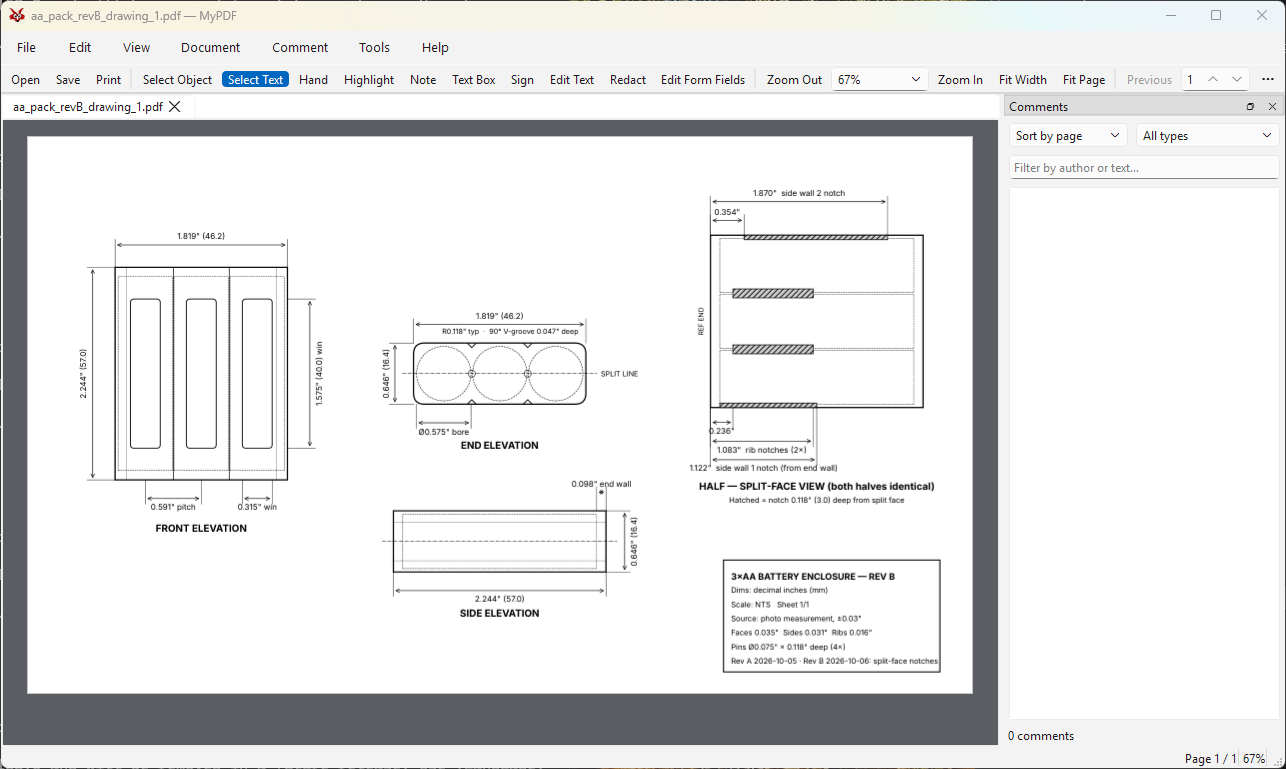
Figure 1. MyPDF Screenshot.
The total cost of this effort was less than $20, and it took about six hours of my time. It is checked into a private repository on Github, and I can deploy new releases, as needed, in a matter of minutes. I’ve uninstalled Adobe Acrobat from all my internal systems and made “MyPDF” the default for *.pdf files.
To be fair to Adobe, they are not the only software company charging subscription fees, and rent taking on old properties, so I’m not calling them out in particular, but this exercise has me thinking there will be a sea change in this practice in the very, very near future.
I’m not the only one having these thoughts, either. For example, a company called ArtCraft was recently featured in an Ars Technica article, "‘Software Is Over’: Bold AI Developer Takes Aim at Adobe with Open Source Clones," which details developer Brandon Thomas’s effort to build free open-source replacements for Adobe’s tools [1].
I don’t plan to ever release MyPDF as an open-source project. It is for internal use only, and will stay that way for now. It’s just that my primary motivation is to save the hassle of dealing with subscriptions and the behavior of products, such as Acrobat, that border on actual malware, not to mention the cost of ongoing fees. I’m done with that and very happy about it.
Also, I don’t think this kind of product will add value as an open-source product. In fact, it would just be another instance of “AI slop,” alongside all the other tens or hundreds of vibe-coded alternatives we are seeing even now. It doesn’t need to be. The fact that I used AI coding to create it gives me the ability to economically create a product purpose-built for my needs with none of the “extras” (and drawbacks noted above) that come along with using someone else’s product, whether open-source or proprietary. I think many other companies, and individual developers, will soon come to the same conclusion.
The implications here are worth considering. What if new AI-enabled open-source projects simply consist of product specifications that permit any capable LLM model, including open weight models, to re-create a basic product that’s extensible by the users and created on demand?
The economics of this may be worth studying. For now, I’m happy not to be paying $240 or more each year for this particular product.
[1] Orland, Kyle. “‘Software Is Over’: Bold AI Developer Takes Aim at Adobe with Open Source Clones.” Ars Technica, October 7, 2026. https://arstechnica.com/ai/2026/10/software-is-over-bold-ai-developer-takes-aim-at-adobe-with-open-source-clones/.